6701 Garden Rd. Unit 3
Riviera Beach, FL 33404 USA
Toll Free: 1 (866) 858-4982
Local: (561) 741-7022


Pressure Washing Garage, Maintenance and Service Shops
For garage, maintenance and service shops we recommend hot water pressure washers cart model or hot water pressure washer stationary unit. If you want to speed up the process of cleaning and finish the job in half time, choose from the liquid propane or natural gas fired hot water power washers . They are designed to operate with two guns and the water pump is driven by the electric power.
If you own an auto, truck or aircraft maintenance shop, and if you plan to keep it clean and oil and grease free, you will need a pressure washer that is capable of removing such spots, providing clean service areas. The most effective machines for those kinds of jobs are the hot water pressure washers. Why is this so? The simple cleaning process requires three components in order to perform a sufficient cleaning. Those components include the pressure (PSI), water flow (GPM) and detergents. These powerful components will work on any hard surface, and are capable of removing any kind of dirt except oil and grease. Oils and greases contain a high viscose element in their substance and can be only dissolved by detergents mixed with a hot water and after that removed once exposed to a high water pressure and significant amounts of water.
Only hot water pressure washers are capable of producing the hot water for such important cleaning jobs as pressure washing maintenance buildings or pressure washing service shops. A hot water machine has two sources. One energy source to create pressure using gasoline engine, propane engine or electric motor and one to create heat using diesel, natural gas or propane. When purchasing a pressure washer you must decide on the energy source as well as performance such as PSI and GPM. Our heavy duty hot water machines are the best pressure washers you will find on the market today. Our hot pressure washers ' page offers a variety of hot water units.
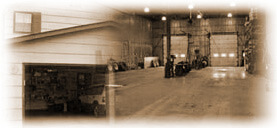
Before you start cleaning garage and/or maintenance shop check for the following:
- Check for presence of flammable or other hazardous material
- Remove all flammable/combustible materials (dispose or recycle waste materials in accordance to government regulations)
-
Do not run engines inside unless ventilation systems are attached , and the exhaust is vent ed outside. Ensure that the ventilation system is working efficiently.
-
Place vehicle and other equipment so there is room to get out in an emergency
-
Set chocks to keep vehicle from moving
-
Use pneumatic (air-powered) or explosion-protect ed tools as a safety precaution even though you checked for flammable vapors
-
Do not drain a fuel tank over or near a pit. Vapors from gasoline and paint solvents are heavier than air
-
Cover pit when not in use with solid, well-fitting boards or install guardrails on all sides of pit. Replace any guardrails that are damaged
-
Do not jump across pits
Here is the advice! Wash your garage store as often as possible, but not less then twice per month. Before you start pressure cleaning remove rings, watches, ties, jewelry, or torn or loose clothing. Button up shirt front and sleeves. Work as a team. Do not start an engine, engage power, or begin spraying without warning other people in the area.
Attach the water hose to your power washer. Check the fuel and oil levels. Start the pressure washer. Adjust the washer for low pressure and small amounts of water.- Start from the corner and work your way across the room. Spray the floor with hot water mix ed with detergent.
- Work on small sections at the time (3-4 feet wide). If you encounter a lot of splashing, reduce the pressure.
- Apply additional amounts of detergent in the areas that contain several layers of oil and grease.
- Allow 5-10 minutes for the detergents to start dissolving the debris being cleaned
- Deliver the "punch" with the high water pressure. Start removing the dirt from the surface. Don't be afraid to use high-pressure washer aggressively since this is the only way the toughest stains can be removed .
- Rinse - use plenty of water to flush away the dirt.
- At the end change oily clothing and launder to prevent skin irritation and dermatitis.
All personnel working in the service area where power washing concrete is taking place, should clean up spilled oil, grease, fuel and other slipping and fire hazards immediately right after the spills occur. Doing so, labor force will work in a safe and mindful environment. Above and underground tanks, pump pits, and similar areas are considered confined spaces and can be dangerous. Only specifically trained individuals should be allowed entry. Contact your local jurisdiction for more information.
The publisher of these pages is in no way responsible for any damage caused to you, your sewer-jetter, anyone else, your property, or anyone else's property by trying to implement or by successfully implementing the above-mentioned performance and services.