6701 Garden Rd. Unit 3
Riviera Beach, FL 33404 USA
Toll Free: 1 (866) 858-4982
Local: (561) 741-7022


Tennis Court Cleaning
 By Victor Hayes Popovics
Power Equipment Expert
Ultimate Washer Inc.
Last Updated: 2012-11-14
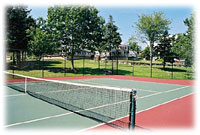
For Williams's wannabes, a home tennis court is a dream. Or, perhaps you are involved with a local community center or athletic club for your tennis playing and practicing. Either way, tennis court cleaning is a must to make sure the surface is safe and free of debris.
Things like dirt, mold, mildew and algae can fester on a tennis court. This dirty surface poses a potential safety hazard to players, as one could slip and fall during a swing. Falling can lead to a potential injury, and a serious injury could mean, well, no tennis for a while. The court simply has better traction when it is clean. So, not only is your clean court safer, but you'll also have a better game! Another reason tennis court cleaning is so important is the high maintenance cost if the court is left unclean for extended period of time. If the surface deteriorates so much that you can't see the lines, and cracks start to appear, your cost for repairing the area will be extremely high. For instance, according to the tennis court frequently asked questions page published by the experts at Fast-Dry Courts, the cost of resurfacing a green clay court can run between $1,500 to $5,000, and sometimes even more.1 The more low areas and cracks there are, the higher the price will be. So, don't let your tennis court get to that stage.
If you have your own tennis court, you are in luck as you can do this yourself by using a power washer. (If you do not have your own, you can suggest this to the maintenance department where you play.) Usually, diesel or gas power washers will be used due to the increased portability of these units.
As you can see on a diagram over at Sports Know How's website, a standard tennis court is 60 feet wide by 120 feet long.2 However, the length and width of the court can be slightly larger or smaller, depending on the application. Therefore, you will need a pressure washer that will able to reach all four corners of the court. Use a pressure washer with at least 100 FT long pressure washer hose. But, before performing a full tennis court cleaning with a pressure washing treatment, you will want to remove anything loose in the area that could be blown away, such as benches, tennis court equipment, balls, and more. Also, make sure there is a trench drain, ditch, or swale on the low side of the court to collect and remove water. The next step would be to remove any heavy debris. This is sort of like when you are vacuuming at home, when you pick up pennies and paperclips before you turn on the sweeper. Around a tennis court, if in a rural area, you may have twigs, branches, leaves and even litter. There may be things like gum that cannot be removed by hand, but can be removed later with the high pressure. After the debris is removed, the area is usually pretreated with a mixture of water and a pressure washer detergent. Next, wash the area using a pressure washer,
adjusted to the appropriate PSI. For this type of job, a medium duty one, about 2000-2600 PSI will do. After letting the soap sit for about five to ten minutes, the area is rinsed and any excess dirt is washed away (just like that ball you let whiz by during your opponent's last serve). Be sure to hit all areas of the court, including those areas outside the playing lines and around court perimeters. Another useful piece of equipment that can be used in combination with your pressure washer is the water brooms. It is used to clean surfaces quickly, easily and evenly. Water brooms are great for tennis court cleaning and rinsing as well as cleaning any other flat surface. The benefits of using a water broom is they are quicker, require less labor, less fuel, and less water consumption--all of which means greater savings in time, stress, and money.
To greatly speed up the tennis court cleaning process, I would recommend looking at pressure washer surface cleaners. A surface cleaner is a pressure washer attachment which includes a rotating bar with multiple nozzles. The high pressure of the pressure washer spins this arm at a high speed, enabling the surface cleaner to clean a much larger area than a wand or a water broom. Surface cleaners come in sizes of 8 inches all the way up to 32 inches, so they can greatly reduce the amount of time it takes to clean any flat surface.
Here are Some Basic Guidelines on How Often You Should Perform Your Tennis Court Cleaning:
Sources:
Read Related Articles:
- Deck Cleaning
Tips on how to prepare and clean your Wooden Deck.
- Brick Cleaning
Do's and Don'ts when it comes to brick cleaning.